


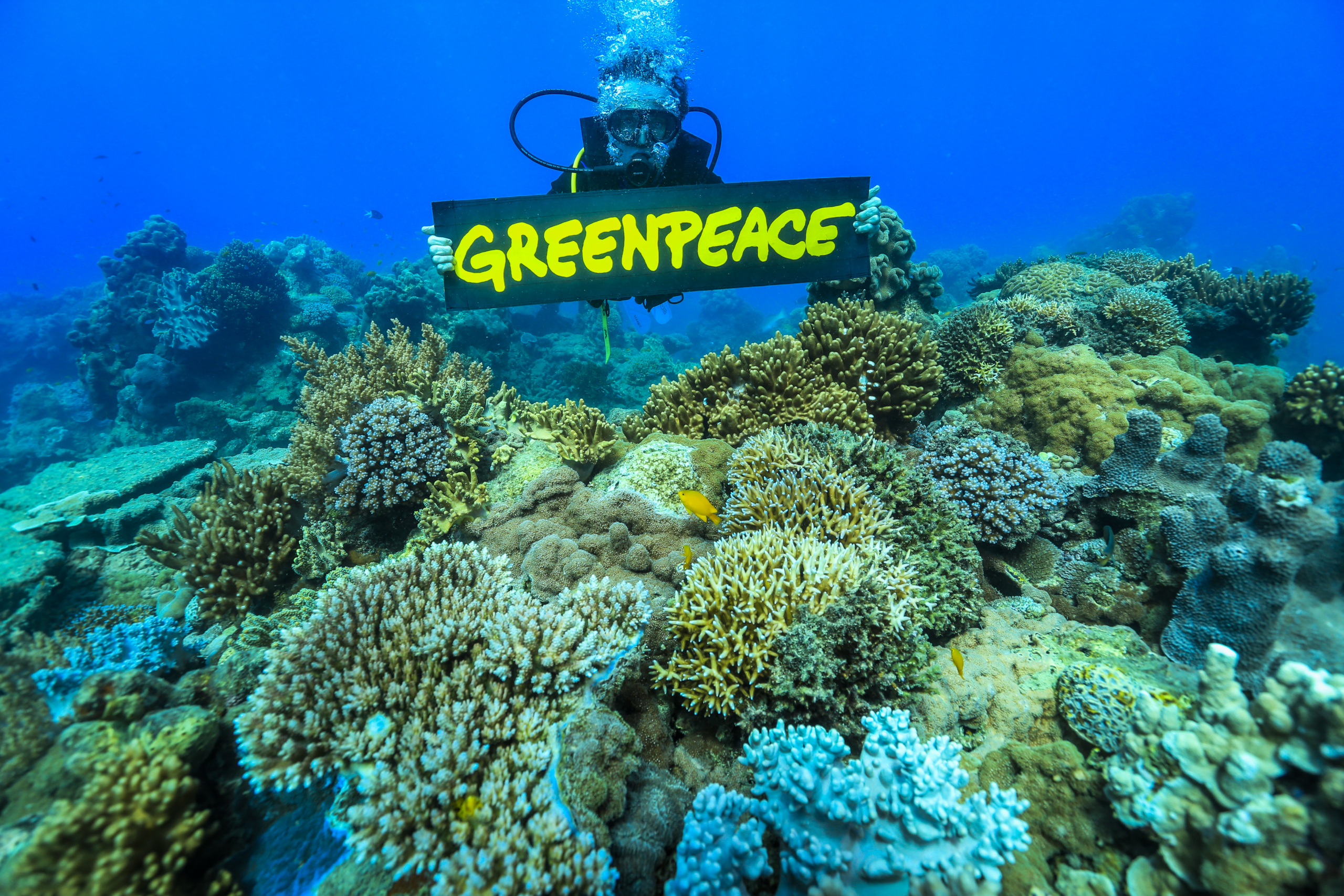
The ocean covers two thirds of the surface of the Earth, generates over half the world’s oxygen and regulates the climate. It has sculpted civilisations, provides food, energy and livelihoods for billions of people and harbours an astonishing array of biodiversity–around a quarter of a million marine species that are known to humans, and perhaps twice that number that we’re yet to discover.
However, for decades the ocean has been plundered, treated as a disposable resource for profit by corporations while governments have looked on. Industrial fishing has decimated fish populations, destroyed marine habitats and threatens the collapse of entire ecosystems. Whales and dolphins are entangled in fishing gear as their food sources are stolen, sharks are finned and thrown back in the sea to slowly die, and turtles choke on pollution.
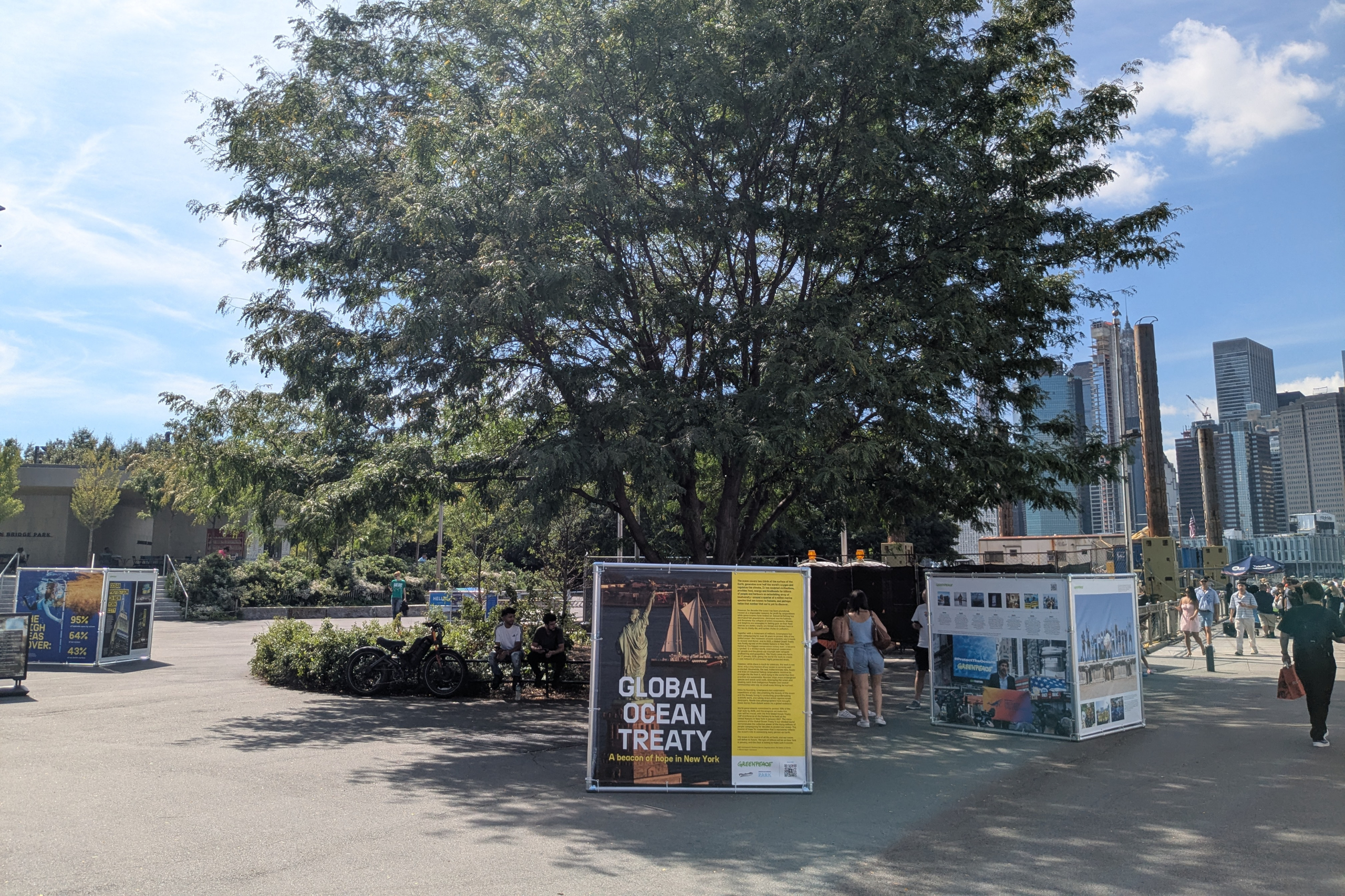
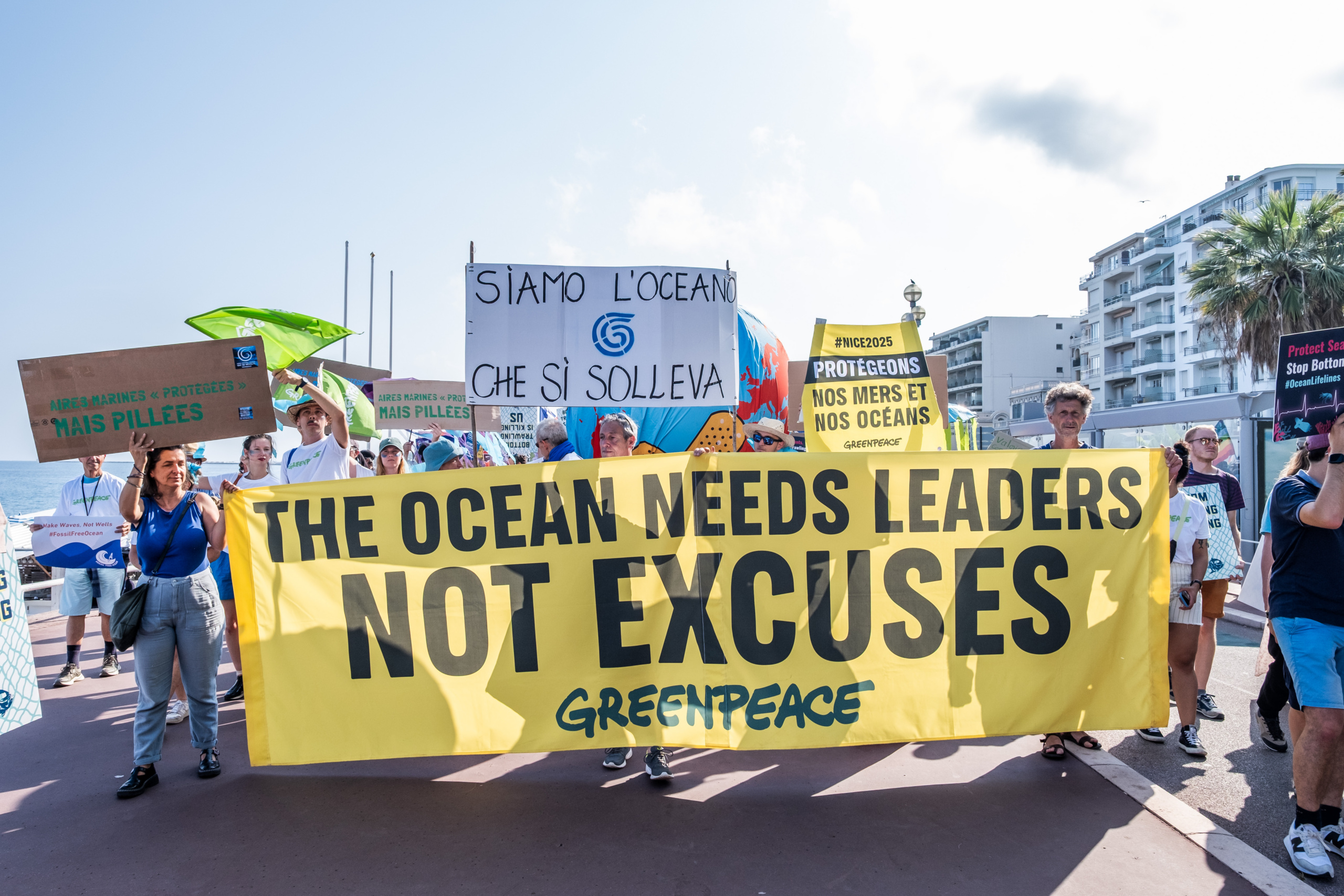
Together with a movement of millions, Greenpeace has been campaigning for over 20 years to protect 30% of the global ocean–the minimum amount scientists say it needs to recover and thrive–and in 2023, a Global Ocean Treaty was finally agreed at the United Nations in New York. Hailed as ‘the biggest conservation victory ever’, it became a symbol: in a divided world, international cooperation for people and the planet can triumph over rampant profiteering and geopolitics. The Treaty came into force on 17 January 2026, giving the world the tools to create a vast network of connected, highly protected areas.
However, while there is much to celebrate, the work is not done: only a tiny fraction of our ocean is currently well protected. Meanwhile, the vast, indiscriminate nets, hooks and lines of industrial fishing corporations continue to strangle the life from it, while lying to the world that their practices are sustainable. Monster ships snare endangered species and wreck coral reefs, destroying the ocean and stealing catch from Indigenous Peoples and coastal communities who rely on small-scale fishing for survival.
Since its founding, Greenpeace has undertaken expeditions at sea–documenting the beauty of the ocean and the threats facing it; conducting groundbreaking scientific work, and taking direct action against ocean destroyers. World-class photographers have brought these stories from distant waters to a global audience.
World governments committed to protect 30% of the high seas by 2030, and the progress we make this year will be crucial, with the first Global Ocean Treaty COP (Conference of the Parties) to be held at the United Nations in New York in January 2027. The mere existence of the Global Ocean Treaty in our divided world demonstrates the collective power of the many millions of people campaigning for decades to protect our ocean. The beacon of hope for cooperation that it represents reflects the ocean’s role in connecting every person on Earth.
The ocean is the source of all life on Earth, and our voices will define its future. The eyes of billions will be on New York in January, and the clock is ticking to make sure it counts.
